In order to discuss the main differences between a teaser trailer and a theatrical trailer, I will use a current example of a film that displays both a teaser and official trailer on Youtube, which are shown below.
The Woman in Black Trailers; (teaser above, main below)
A teaser trailer is designed very obviously to tease the audience and arouse an interest in to watching the film, it gives limited details about the narrative but does include important aspects that would interest their target audience, such as the genre, the title, and a very basic narrative.
Thus the above teaser trailer only lasts around 50 seconds, whilst the official theatrical one lasts almost 2 minutes. This is because the teaser trailer is designed mainly to build an interest in the target audience and so once the main trailer is released the audience already want to know more about the film. Also in the main trailer, the date of release is usually included, and in this case particularly, similar shots are used to build continuity between the two clips and to reinforce the aspects that made the audience want to watch it in the first place. The theatrical trailer usually gives much more away about the narrative, and this is what entices the audience to actually see the film.
Showing posts with label D. Appendix 1: Research for main product. Show all posts
Showing posts with label D. Appendix 1: Research for main product. Show all posts
Thursday, 29 March 2012

Wednesday, 7 December 2011
Representation of Women in Horror
Carol Clover, in men, women and chainsaws argues that horror’s representation of gender is very interesting because it frequently offers its core target audience of young males an identification with a female character, unlike any other mainstream genre. To what extent do you think horror’s representation of gender challenges dominant representations?

In the media, gender has been typically represented in a certain way for many years, only in recent years has this dominant ideology and conventional representations been challenged by progressive media products. Males and females are stereotyped; males often shown as dominant, strong and heroic as opposed to females who are often objectified and shown as a weaker sex in general.
Jeremy Tunstall argues that female roles in the media are categorised into four main areas:
domestic sexual consumer marital
He argues that any woman in the media will fit into one of these categories, usually shown through their relationship to men, (e.g. wife, mother), as a sex object, an eager consumer or a housewife, but a male is rarely shown in any of these forms.
 The visibility of women in the media is also limited in comparison to men, in a study conducted in 1992 a ratio of 2:1 males to females was found; showing that men are much more common in the media, there are also certain types of females that are rarely represented such as black women or homosexual women.
  Laura Mulvey suggests that commercial cinema puts its audience in the eyes of an appraising heterosexual male through the use of camera techniques creating something known as the ‘male gaze’. It uses ‘sadistic objectification’ to show women as objects rather than people, and allow males to become subjects who enjoy the view; it denies women’s rights to their own subjectivity. Camera techniques used include long shots of the female; tilting up the body and fragmenting it into different parts and also using close-ups and POV shots of the male in order for the audience to connect and be able to relate to him. Theorists including Mulvey argue that this is a sexist viewing and denies women their right to subjectivity by controlling them and showing them only as objects.
 However, if this male gaze is true in mainstream cinema would that not isolate particular audiences, such as women and homosexual males? Others also suggest that women look at themselves through a male gaze and see themselves as what a male would, the male gaze has become internalised and part of their self identity.

In Carol Clovers book ‘Men, Women and Chainsaws’ she discusses many films, in particular one named ‘Carrie’ in which a shy high school student is bullied by her peers and when her period begins she gains a telekinetic power and enforces revenge on her bullies. Predominantly the target audience for horror movies are 17-24 year old males and so an interesting point arises about the film ‘Carrie’ which has a very feminine narrative. How can young males relate to a female character such as this one, who gains inner strength from her menstrual period and uses it as a revenge strategy against her bullies?

Stephen King, (author of the book) states that ‘Carrie’s revenge is something that any student who has ever had his gym shorts pulled down in Phys Ed or his glasses thumb-rubbed in study hall could approve of’ as an explanation of both the film and books success. Despite the use of ‘any student’ in this quote he continues to explain using the pronoun ‘his’ and describing having glasses ‘thumb-rubbed’ which is an unusual activity for any females to do to each other or in fact for males to do to females. But what he is trying to suggest is in fact that a boy can recognise himself in a girl, and that males are prepared to identify with a vulnerable female character in horror due to their own experiences in which they were also vulnerable. Quite contrasting in terms of action movies where males can identify with action heroes who are represented as strong, heterosexual and brave. This is one of the reasons that the horror genre is so different to most, the fact that males identify with vulnerable females, suggesting a more progressive nature in terms of the representation of women but also leading to many theorists wondering why this works so well.
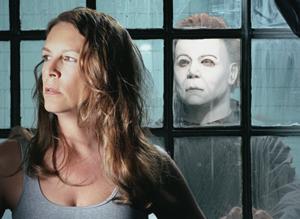


When it came to roles represented in horror, I discovered that interestingly although all three films contained the roles specified by Tunstall they also contained female protagonists that did not fit into these roles as such. I found it hard therefore to argue whether horror was indeed progressive or not in relation to roles, as my results did not substantially support or disprove this idea. In Halloween, both domestic and sexual objects were represented by the characters but the fact that Laurie was the final girl I thought balanced the argument although Laurie did obtain a slightly domestic role whilst babysitting, I thought that the fact she stopped the killer outweighed this. In The Shining the female roles represented included domestic, sexual, (the bath tub woman), and familial. However Wendy, whose roles included both domestic and familial became the final girl and even takes over her husband’s job when he becomes ill, which in fact shows her in a progressive light. In Eden Lake the roles shown were mainly domestic and familial, although a female gang member also seemed to have a rather passive role in the gang which supports Tunstall’s theories. Even Jenny, the final girl and female protagonist has a domestic role associated to her in relation to her career. But she does become increasingly monstrous in the film to combat her enemies which does support the idea that horror is progressive.

And finally narrative, to investigate this I decided to count how many deaths there were in each film and compare the number of males compared to females to see if females were punished particularly more than males. Mostly in horror films the idea is that females get punished for transgressing male rules involving sexuality and how men should be in control. Generally I found that in fact females were not significantly punished more than males were, in some cases the death counts were equal such as in The Shining. In Halloween the female deaths were slightly higher, a 60% female and 40% male ratio existed but this percentage isn’t overly higher than the males and was probably due to the fact that there were more female than male characters anyway. Eden Lake also showed roughly equal death counts and therefore suggests that horror is a progressive genre.

Overall, horror shows progressive qualities such as the narrative and male gaze but it does also contain aspects of traditional representations of gender. Each film did support the idea of a final girl character, showing masochistic identification but it did also show typical representations of female roles such as domestic and sexual roles. The male gaze in horror appears to be something that undermines its effectiveness and almost punishes those who participate in it. In conclusion I personally think that horror is a progressive genre, although it may contain aspects of typical female roles it also allows the audience to identify with a female protagonist and does not represent her in any stereotypical way, and isn’t the main character and her story the part the audience focus on and become involved in anyway?
Wednesday, 30 November 2011
The Role of the Distributer
The film industry aims to create an enjoyable experience for its audience, but the most vital part of achieving this is to actually distribute the film; the distribution engine which aims to attract an audience and to convince them that their film is one that they must watch. It is the distributors job to find the largest audience possible for every film produced.They are the vital linchpin of the 'value chain' that drives the film industry.

There are around 500 new titles released every year in the UK alone, but research put forward by Lord Puttnam suggests that most cinema goers already know in advance which films they want to see before they are even released, and it is important for distrubutors to create this awareness in order for the audience to develop an interest in seeing the film.
In recent years the methods of advertising, creating films, and even showing them has changed dramatically, advances in technology has allowed different methods to be put into practise and has remodelled the ways that people interpret cinema. This digitalisation has allowed advertising to become much easier and identification of audience to be much more specific, it also allows the audience a much wider range of choice when it comes to films.

Distribution plan
In order for distributors to bring each film to the market they must follow specific steps to effectively create awareness of a film. These are as follows:

- Identify an audience
- Consider why they would watch the film
- Estimate a revenue potential across all formats of the release
- develop plans and partnerships to build awareness and interest
- Aim to gain as much interest as possible into cinema visits
- Persuade exhibitors (cinemas) to play the film
 Like most forms of entertainment the film business is product driven; the films are the main reason to buy tickets. Cinemas still remain the best way to create demand to see a film and have the most impact. Film makers desire to get their own films broadcasted in this way and allows audiences to share a uniquely immersive uninterrupted experience.
After the initial release of a film it is important for distributors to continue the audiences interest in a film, usually by releasing it onto different formats that the audience can take full advantage of and use to suit their own needs. Three main ways to do this are as follows:

- Digital home entertainment; online stores and DVD/Blu-Ray
- Various pay-per-view methods and subscription television
- Free to air TV; films that can be repeatedly shown each year
- Producer/company acquires the rights to film a narrative
- The Screenplay is developed by writers
- Production finance and cast and crew are chosen
- Principal photography takes place, in studios and chosen locatios followd by post-production work such as editing and scoring
- Distributor develops a release strategy and takes delivery of a master print of a finished film
- Distributor presents the film to the exhibitors and negotiates agreements to have it shown in cinemas
- Distributor's marketing campaign tries to convince the target audience to watch the film
- Film prints including the BBFC certificate are delivered to cinemas before the opening
- Film's run extends any number of weeks subject to demand, which could increase through additional marketing
- The film is released in other formats and becomes a catalogue title
Films that distributors release can be obtained from various sources such as a third party sales agent, a continous flow of new content from a parent studio, a studio with whom the distributor has negotiated a ouput deal covering a slate of titles and a single titled acquired at any stage before during or after production.

See this link for further details: http://launchingfilms.tv/acquisition.php?video=1&autostart=1
Monday, 14 November 2011
Horror Movie Trailers
What I found most interesting about this trailer was the contrast between good and evil, a common narrative structure used in horror. The fact that a young girl is portrayed as evil was something that I found odd and wanted to watch more of. The trailer also contained some interesting shots, such as the close-up of the swings moving and the canted angles looking at the girl.
I decided to look at this trailer particularly because eyes are something that I find quite disturbing when tampered with. This film contains a number of close-ups of eyes and also point of view shots which blur and mimic the opening of an eye; something I find to be quite scary.
I liked this trailer mainly for the use of camera work, I liked the handheld shots such as when they were running down a hallway and also the CCTV type work that were used in the bedroom. It is something that I find interesting and would possibly like to include in my own trailer.
Wednesday, 2 November 2011
Freud's Theories
 Sigmund Freud is a psychologist who developed the psychodynamic approach to psychology, he played a leading role in creating psychoanalysis therapy, and has some interesting theories about how people can repress painful memories and also inappropriate thoughts into the unconscious. He states that repression is a coping mechanism in which people can block out these thoughts.
 He believes that the mind is made up of three major parts, the conscious, the pre-conscious and the unconscious; from an early age any inappropriate thoughts (such as murdering our parents as Freud believes is part of our psychosexual development) are deemed to be socially unacceptable and so are repressed into the unconscious. Freud believes that people cannot access their unconscious and so this material is lost unless a therapist can access it through dream analysis or other psychoanalytical techniques.
 However, material that has been repressed can still leak from the unconscious through the forms of dreams, slips of the tongue or parapraxes.
I think that Freud's theories relate to horror films in the sense that the audience watch them to feel scared and to see explicit things that they usually wouldn't be able to see. Also it could enable the audience to connect with unconscious material through the means of watching films like these, potentially watching horror films where socially unacceptable behaviour occurs it could ignite old repressed material and allow the audience to almost vent their frustrations in an acceptable manner; by watching horror films.
Oedipal Law
 Freud believed that the oedipal complex is a person's sexual desire for their mother; that both females and males have a crush on their mother and want to kill their father. There are also several stages to this complex which develop an infants psychosexual development, including the oral stage, anal stage, phallic stage, genital stage and latent stage. Unless developed normally with successful resolutions, a child can become fixated on one stage meaning that it could potentially lead to neurosis, paedophilia, and homosexuality.
  Oedipal Law is often used as a basis in horror films and defines the genre as one of taboos and psychological insight. Although the horror genre may not directly reflect Oedipal Law, it is an example of the psychoanalytical behaviour often related to viewing something deemed “sick”, however this view of the genre is defended by the theories that can be applied to it in order to explain the possible meaning behind the films.
 Also the idea of the return of the repressed is a common theme used in horror that orginates from the 19th century horror story 'Dr Jekyll and Mr Hyde', the narrative consisting of the hidden horror inside all of us that the audience can relate to themselves.
Friday, 21 October 2011
Applying Narrative Theories to 'The Shining'
There are four main theorists that I have learnt about, each with different theories concerning the narratives used in films. In this post I will apply these theories to the horror film 'The Shining' and see if they are represented in this.
Tzvetan Todorov
Todorov constructed his theory based on equilibriums, stating that a film will begin with an initial equilibrium with a sense of normality until an event occurs causing a disequilibrium, also known as an enigma. The characters in the film will then take the pathway to resolution; which is not always a clear pathway, until they reach closure and a new equilibrium is created.
Another, perhaps simpler way of explaining a narrative according to Todorov is a narrative begins with the hero, an agent of change occurs which leads to a quest in order to reach closure.
These are represented by diagrams shown below.
This theory can be related to The Shining because the film follows a similar structure itself, it begins with a sense of normality; Jack and his family have arrived at the hotel and at first everything seems fine. This is then disrupted by Jack's behaviour as he becomes increasingly psychotic. The pathway to resolution is Jack's family trying to interpret his behaviour and trying to stop him from killing them, before they escape from the hotel in a snow mobile. A new equilibrium is formed in the sense that Jack is not part of the new equilibrium and his family are now safe.

Overall this theory does fit quite well with this film, however I think that this theory is very vague and can be applied to many different narratives. An 'equilibruim' is not very specific and so you would expect most narratives to follow a format such as this one. The only variance in the narratives is the path to resolution and how 'bumpy' the road to resolution is.
Vladimir Propp
Propp studied 100s of examples of folk tales to look for similarities in narratives. He constructed a list of 8 different character roles and 31 narrative functions in which he believed were present in most narrative structures. The 8 different character roles are:
I also identified some of the narratives structures specified by Propp, such as 'a member of the family leaves home' and 'the villain harms a member of the family' but they did not precede in the same order as Propp suggested, and also were lacking in the return and recognition sections of the narratives.

Overall this theory kind of relates to the shining, but it was very difficult to relate a complex plot to simple plot developments suggested by Propp, also it did not allow me to learn anything in particular about the plot, it only identified that it contained some of the procedures shown in the film.
Claude Levi-Strauss
 Levi-Strauss's theory is based on the idea of binary oppositions, binary opposites are two things that are completely different and reveal the structure of a media text. He looked at the themes present in narrative rather than what order they happen in.
Examples of binary oppositions are as follows:
This theory does relate to the Shining, for example it includes binary opposites such as good and evil, past and present, and normal and strange. However this theory is very simplistic and although it does tell us what kind of themes the film contains it does not really explain much more about the narrative itself.
Bordwell and Thompson
 Bordwell and Thompson defined narrative as 'a chain of events in a cause-effect relationship, occuring in time and space', they did not construct a full theory as such but created some interesting points about narrative. They believe that a narrative begins with one situation, and a series of changes occur which have an effect on the situation and a new situation arises that brings an end to the narrative.
 They believe that it involves both the delineation of time and space. The delineation of time involves the screen duration, plot duration and story duration. This delineation consists of technical techniques such as flash backs, action replays, slow motion and jumping between times and places which can build a narrative structure and allow a narrative to be shortened down to an hour or so long film.
The idea is that the audience naturally makes connections between the things that they see, for example when shown a shot of a house and the next shot being in a bedroom, we automatically create a connection and assume that the room is inside the house. Some directors believe that it is more effective to show consecutive shots that are not obviously linked in order for the audience to be forced to think and interact with the film.

Despite this not being a fully constructed idea, I can link some of these ideas to the film 'The Shining', for example the time delineation is particularly correct in this film as it takes a narrative lasting 60 years and compresses it down to a film lasting 115 minutes, the plot duration it self lasts 6 months and through this technique you can reduce it down enabling directors to create a fully complex narrative in a short film. Also the montages of shots works quite effectively in this film, for example we see Jack hitting a door with an axe, it then cuts to Wendy and Danny in a bathroom scared and staring at the door, implying that Jack is hitting the door of the room they are in.
Overall I think that all of these theories can loosely be related to The Shining, but none of them can truly be related and give an overall view of what will happen in the plot and the sort of things to expect. The closest exception I believe is the theory by Bordwell and Thompson, despite not constructing a full theory into what the plot will contain they did make some interesting points into how narratives are generally constructed and the manner in which films deal with time. After researching this theory I believe that this is the most enlightening and can be related most to actual films like The Shining.
Tzvetan Todorov
Todorov constructed his theory based on equilibriums, stating that a film will begin with an initial equilibrium with a sense of normality until an event occurs causing a disequilibrium, also known as an enigma. The characters in the film will then take the pathway to resolution; which is not always a clear pathway, until they reach closure and a new equilibrium is created.
Another, perhaps simpler way of explaining a narrative according to Todorov is a narrative begins with the hero, an agent of change occurs which leads to a quest in order to reach closure.
These are represented by diagrams shown below.
This theory can be related to The Shining because the film follows a similar structure itself, it begins with a sense of normality; Jack and his family have arrived at the hotel and at first everything seems fine. This is then disrupted by Jack's behaviour as he becomes increasingly psychotic. The pathway to resolution is Jack's family trying to interpret his behaviour and trying to stop him from killing them, before they escape from the hotel in a snow mobile. A new equilibrium is formed in the sense that Jack is not part of the new equilibrium and his family are now safe.

Overall this theory does fit quite well with this film, however I think that this theory is very vague and can be applied to many different narratives. An 'equilibruim' is not very specific and so you would expect most narratives to follow a format such as this one. The only variance in the narratives is the path to resolution and how 'bumpy' the road to resolution is.
Vladimir Propp
Propp studied 100s of examples of folk tales to look for similarities in narratives. He constructed a list of 8 different character roles and 31 narrative functions in which he believed were present in most narrative structures. The 8 different character roles are:
- The villain
- The hero
- The Doner- who provides a magical object
- The helper who assists the hero
- The princess (the sought for person) - reward for the hero and the object of the villain's schemes.
- Her Father- who rewards the hero
- The dispatcher- who sends the hero on a quest
- The false hero
I also identified some of the narratives structures specified by Propp, such as 'a member of the family leaves home' and 'the villain harms a member of the family' but they did not precede in the same order as Propp suggested, and also were lacking in the return and recognition sections of the narratives.

Overall this theory kind of relates to the shining, but it was very difficult to relate a complex plot to simple plot developments suggested by Propp, also it did not allow me to learn anything in particular about the plot, it only identified that it contained some of the procedures shown in the film.
Claude Levi-Strauss
 Levi-Strauss's theory is based on the idea of binary oppositions, binary opposites are two things that are completely different and reveal the structure of a media text. He looked at the themes present in narrative rather than what order they happen in.
Examples of binary oppositions are as follows:
Good and Evil
Earth and Space
Humans and Aliens
Past and Present
Normal and Strange
Known and Unknown
This theory does relate to the Shining, for example it includes binary opposites such as good and evil, past and present, and normal and strange. However this theory is very simplistic and although it does tell us what kind of themes the film contains it does not really explain much more about the narrative itself.
Bordwell and Thompson
 Bordwell and Thompson defined narrative as 'a chain of events in a cause-effect relationship, occuring in time and space', they did not construct a full theory as such but created some interesting points about narrative. They believe that a narrative begins with one situation, and a series of changes occur which have an effect on the situation and a new situation arises that brings an end to the narrative.
The idea is that the audience naturally makes connections between the things that they see, for example when shown a shot of a house and the next shot being in a bedroom, we automatically create a connection and assume that the room is inside the house. Some directors believe that it is more effective to show consecutive shots that are not obviously linked in order for the audience to be forced to think and interact with the film.

Despite this not being a fully constructed idea, I can link some of these ideas to the film 'The Shining', for example the time delineation is particularly correct in this film as it takes a narrative lasting 60 years and compresses it down to a film lasting 115 minutes, the plot duration it self lasts 6 months and through this technique you can reduce it down enabling directors to create a fully complex narrative in a short film. Also the montages of shots works quite effectively in this film, for example we see Jack hitting a door with an axe, it then cuts to Wendy and Danny in a bathroom scared and staring at the door, implying that Jack is hitting the door of the room they are in.
Overall I think that all of these theories can loosely be related to The Shining, but none of them can truly be related and give an overall view of what will happen in the plot and the sort of things to expect. The closest exception I believe is the theory by Bordwell and Thompson, despite not constructing a full theory into what the plot will contain they did make some interesting points into how narratives are generally constructed and the manner in which films deal with time. After researching this theory I believe that this is the most enlightening and can be related most to actual films like The Shining.
Friday, 7 October 2011
Last House on the Left Trailer Analysis
Setting
The setting for this film is an isolated house near a lake, there are no other houses near by which creates a sense of desperation when things begin to go wrong in the film because no one can help. This is conventional of horror movies because it isolates the characters and creates more danger for them. We become aware of the fact that the house is isolated very early on in the trailer, we are shown a close-up of a sign reading 'Lake ends in the Road' and also hear the characters name the title of the film whilst they are travelling there.
Technical Code
 The trailer begins with an establishing shot which reveals a silver 4x4 car driving along a road, connoting an average American family. The camera tracks the car and tilts upwards which focuses our attention on the moving vehicle. A soft piano soundtrack is used at the beginning to create a sense of normality. We hear the dialogue of the characters and hear them speak about the 'last house on the left' that they are travelling to.
Throughout the trailer there are many close-ups of the main girl Mary, allowing the audience to identify with her. A two shot is used to introduce Mary's mother who is sat beside her in the car. The fact that Mary is driving also implies that she is the protagonist.
At the beginning of the trailer the editing is slow paced, the shot transitions used are dissolves, which suggest a softer atmosphere. As the tension is built up, with help from the sound effects and non-diegetic music the editing pace increases, and the dissolves are replaced to cuts to black between different frames. A percussion noise is used between shots for continuity and acts as a soundbridge between settings. It almost sounds like a crashing noise which implies thunder.

When the villains arrive back home, a louder crashing noise shows that this is where the danger has begun. The piano has stopped and all we hear is a tense and quiet beat in the background through the loud and aggressive dialogue as it explains the story behind the villains. Many diegetic sound effects are used to assist what is being shown in the trailer such as gun shots, a door frame snapping, a girl hitting her head and knives being removed from racks. The crashing noise is used consistently throughout the trailer and is also used when the text appears on the screen.

The interesting thing about this trailer (the main reason I chose it) is when the non-diegetic music kicks in when the parents discover their daughter lying almost dead on the porch. The song is a cover of 'Sweet Child of Mine' by Guns and Roses, but instead is sung by a female singer. It is quite contrasting to what is happening on the trailer as we hear screams and shouting interrupting the song, however it is very relevant to the plot of the film.
The realisation that the villains have arrived at the house of their victim is shown in a very intense moment, a close-up of the villain reveals a shocked expression and a eyeline match is then used to show us a picture of the victim which is zoomed in on. This is a POV shot which puts us in the eyes of the villain, used quite conventionally in horror to put the audience in a situation where they are the killer. The shot also appears handheld as it is quite shaky and representative of his emotions. We then see a reaction shot of the villain as he realises that he is inside his victim's house.
Flashes of lightning are then used to move from shot to shot as the realisation dawns on the characters and the parents of the victim discover that their daughter and themselves are in danger. The lighting throughout these scenes is ambient, and a beam of light is used to suggest a torch when they discover their daughter lying on the porch.
A recurring theme in the trailer is the use of a crane shot, this shot is repeated several times throughout the trailer and it shows the protagonist lying face up in the lake. This suggests that she is dead, but because of the reoccurence we are unsure of when she dies along the narrative.

Iconography
The main colours in the trailer are black and blue, the black is used to connote danger and evil, conventional of most horror films, but instead of the typical red used for blood, the main colour apparent in the trailer is blue. Perhaps to indicate the importance of water in the film.
Low key lighting is used heavily to give an eerie and ambigious setting. The trailer also contains props which are conventional of horror, such as knives and large surburbian houses. But one prop which is quite unusual of horror is the use of the gun. I think that the gun is used to show possibly a weakness in the villains. The fillm is set in America and it is quite typical for American's to use guns for protection, the villains are portrayed as criminals and have no supernatural qualities like villains in most horror films, which is probably why the victims find it quite easy to kill them with only the aid of a knife.
Narrative structure
This film seems to go against most narrative theories in horror, it is a revenge story, and instead of there being a final girl it is the protagonist and her family that survive and help conquer the villains. Although Mary did survive from the horrific trauma she suffered from the villains, her friend did not, which is similar to the final girl theory but Mary does not defeat the villains alone like most 'Final girls' do.
Character Types
 This film contains a main protagonist, Mary, who is attractive and also sexualised early in the trailer, but unlike most characters in horror films, she does not die but appears to be punished. The film contains a group of villains, who appear as some kind of disfunctional family, containing both females and males and also a young teenage male who attracts the protagonist and her friend to the danger in the first place. There is one teenager who dies in the film, being Mary's friend Paige, but she is not represented any less intellectual or any more sexualised than Mary, making it seem unconventionally cruel that she dies. This film doesn't contain any kind of law enforcement, which is also unconventional of horror but does add to the isolation factor, making the situation more desperate and difficult to handle.
Themes
The film does contain binary oppositions, good vs evil is shown through the characters, although with the young male is questionable whether he is truly a villain or not. This film seems to support the idea that horror is based on the three classic novels from the 1900's; Frankenstein, Dr Jekyll and Mr Hyde and Dracula. This film is based on Dr Jekyll and Mr Hyde in the sense that there is hidden evil inside all of us, we can relate to the main character and her parents, and are surprised by the revenge story. It becomes something that we could all be capable of to protect the ones that we love. Thus giving into that evil that we all apparently have inside in order to protect our loved ones.
Overall, this film contains many conventions that are typical of horror, particularly technical ones such as camerawork and setting, however the plot of this film is not very typical and the narrative structure does not support many of the theories I have learnt about.
Subscribe to:
Posts (Atom)